Egypt isn’t just a country; it’s the world’s ultimate time machine. While many are drawn by the magnetic pull of the Giza Pyramids, this North African gem offers a timeline so deep and rich that a single visit only scratches the surface. From the dawn of civilization to the bustling, caffeine-fueled streets of modern Cairo, Egypt is a tapestry woven from gold, desert sand, and the life-giving waters of the Nile.
The Dawn: Prehistoric Egypt (c. 6000–3100 BCE)
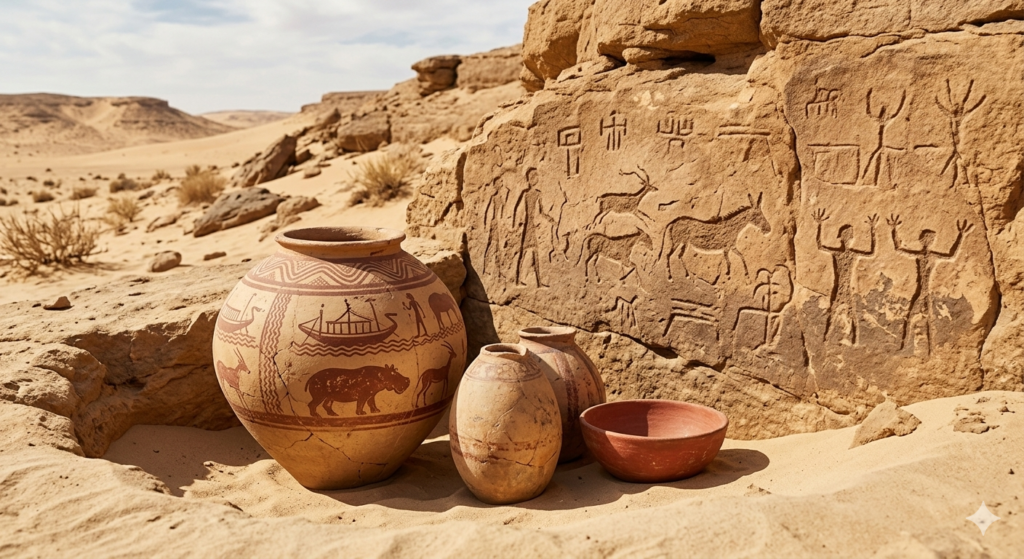
Long before the first pharaoh, Egypt was a collection of nomadic tribes and early agricultural settlements scattered along the Nile. This era, known as Predynastic Egypt, laid the crucial groundwork for what was to come. It was during this time that the foundations of Egyptian religious belief, pottery styles, and social hierarchies began to emerge, particularly in flourishing settlements like Hierakonpolis and Naqada.
The Golden Age: Ancient Egypt (c. 3100–332 BCE)
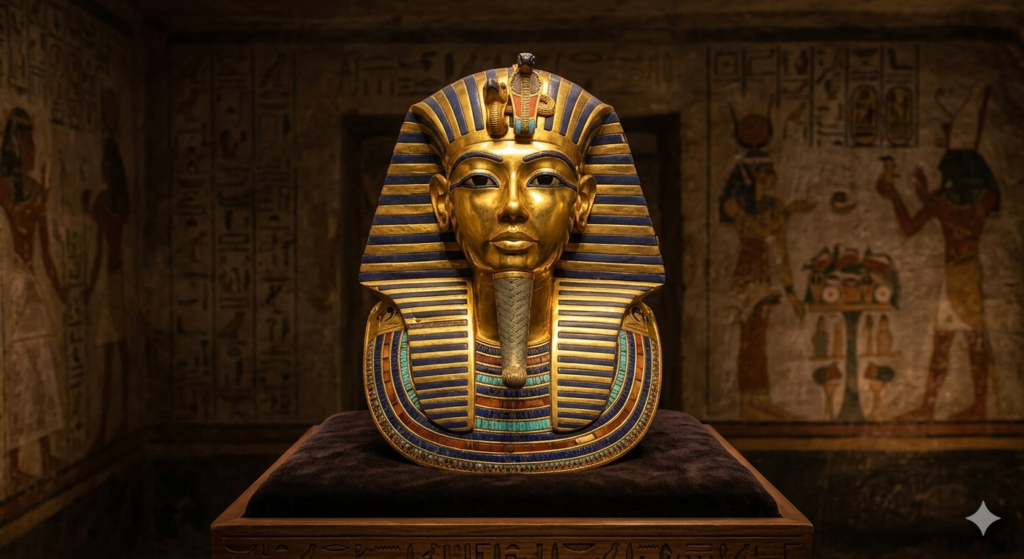
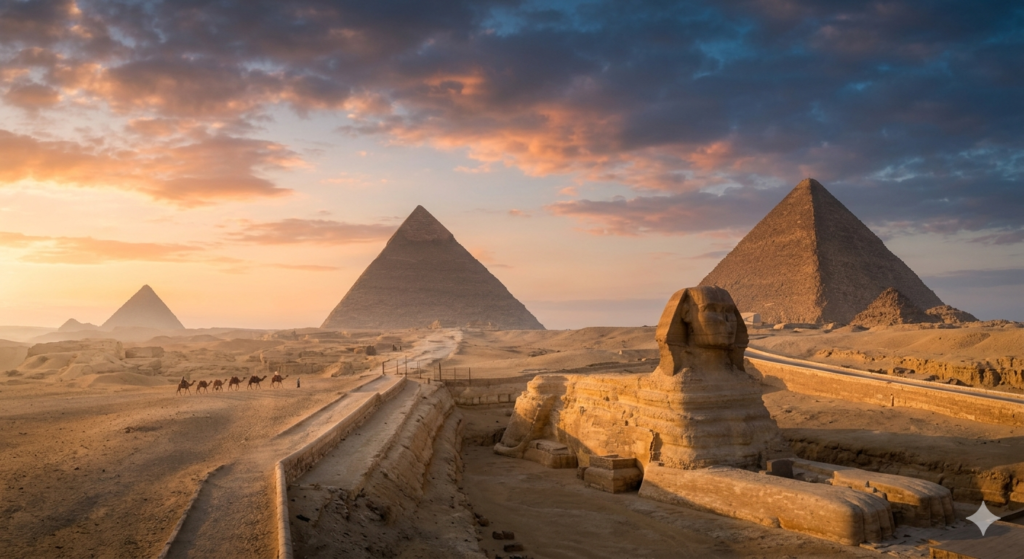
This is the era that defines the popular imagination of Egypt. Beginning with the unification of Upper and Lower Egypt under King Narmer, the pharaonic age produced the monumental Old Kingdom—think the Great Pyramid of Giza, the oldest of the Seven Wonders of the Ancient World. The Middle Kingdom saw a resurgence in art and trade, while the New Kingdom became the “Imperial Age,” boasting iconic figures like Hatshepsut, Akhenaten, and Tutankhamun.
Transitions and Turmoil: Late Period (c. 664–332 BCE)
Following the peak of the New Kingdom, Egypt entered the Late Period, characterized by alternating periods of native Egyptian rule and foreign invasions. This was a time of increased contact with the Greek world and struggle against powerful foreign empires, including the Nubians, Assyrians, and the Persians. Despite the political turmoil, religious life and traditional temple construction continued.
Hellenistic Splendor: Greco-Roman Period (c. 332 BCE–30 BCE)
Everything changed in 332 BCE when Alexander the Great was welcomed as a liberator from Persian rule. He founded Alexandria on the Mediterranean coast, which soon became the most sophisticated intellectual city of the ancient world. The ensuing Ptolemaic Dynasty embraced many Egyptian customs while introducing Hellenistic influences, ending spectacularly with the reign of Cleopatra VII.
Under the Empire: Roman Egypt (30 BCE–641 CE)
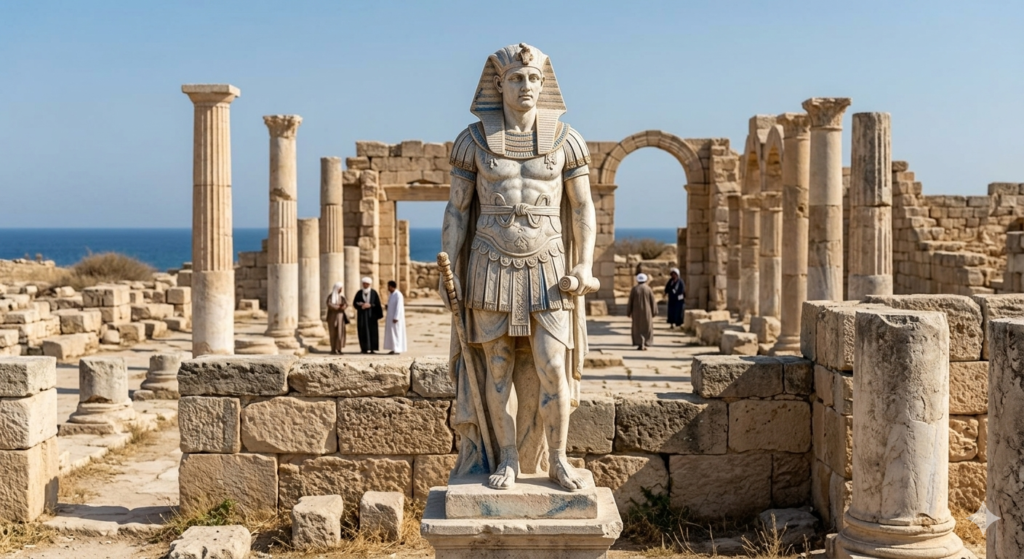
After the defeat of Cleopatra, Egypt became a vital province of the Roman Empire, often referred to as Rome’s “breadbasket.” The Romans exploited Egypt’s resources heavily but also left their mark, blending Egyptian, Greek, and Roman artistic styles. During this era, Christianity began to spread rapidly, giving rise to the rich Coptic culture still present today
The Crescent Moon Rises: Islamic Period (641 CE–1517 CE)
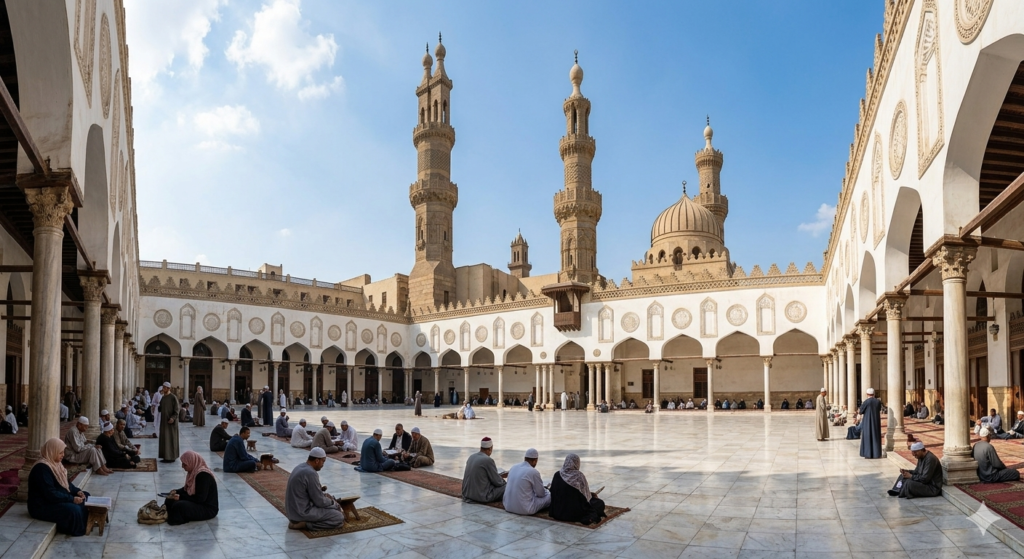
The Arab conquest in 641 CE ushered in a profound transformation. Led by the general ‘Amr ibn al-’As, Egypt became a pivotal part of the Islamic Empire. Later, under the Fatimid Dynasty, the modern city of Cairo was founded in 969 CE, followed by the establishment of Al-Azhar University. Subsequent dynasties like the Ayyubids (under Saladin) and the Mamluks further solidified Cairo’s status as a jewel of the medieval world.
The Sultan’s Realm: Ottoman Period (1517–1867 CE)
The Ottoman conquest in 1517 brought Egypt under the central authority of Constantinople. While still a prosperous province, its political importance shifted as it became an administrative unit governed by Ottoman pashas. This period was marked by relative stability, though trade routes eventually began to move away from the eastern Mediterranean
French Invasion and the Muhammad Ali Dynasty (1798–1953)
Napoleon Bonaparte’s 1798 invasion brought not just soldiers but scholars whose discoveries, including the Rosetta Stone, sparked the science of Egyptology. After the French retreat, Muhammad Ali seized power in 1805. Regarded as the “Founder of Modern Egypt,” his dynasty oversaw aggressive modernization and the construction of the game-changing Suez Canal.
The British Shadow: British Occupation (1882–1956)
Mounting debt and political instability led to the 1882 British invasion. Although Egypt technically remained a kingdom, the British exercised real political and military control. This period saw increased tension with nationalist movements until the Revolution of 1952 finally paved the way for total independence and the end of the monarchy.
The Modern Republic: Modern Egypt (1953–Present)
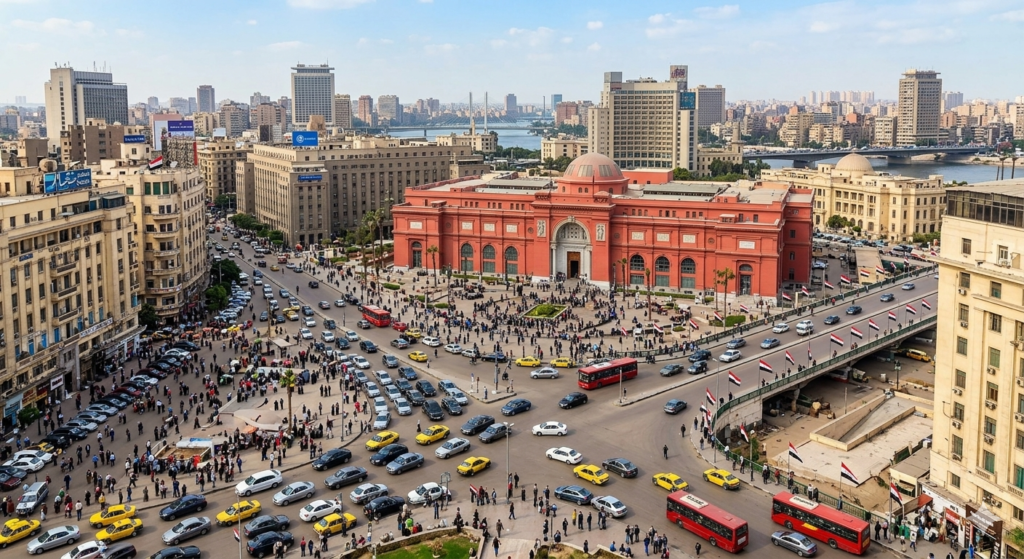
Since becoming a republic, Egypt has been a vibrant, geopolitical heavyweight. Today, it balances rapid economic development with the preservation of its incomparable heritage. Visitors today can experience a mix of ancient wonders and high-tech museums, all while navigating one of the most culturally influential nations in the Middle East.
Top Hotels in Egypt
1. Marriott Mena House, Cairo
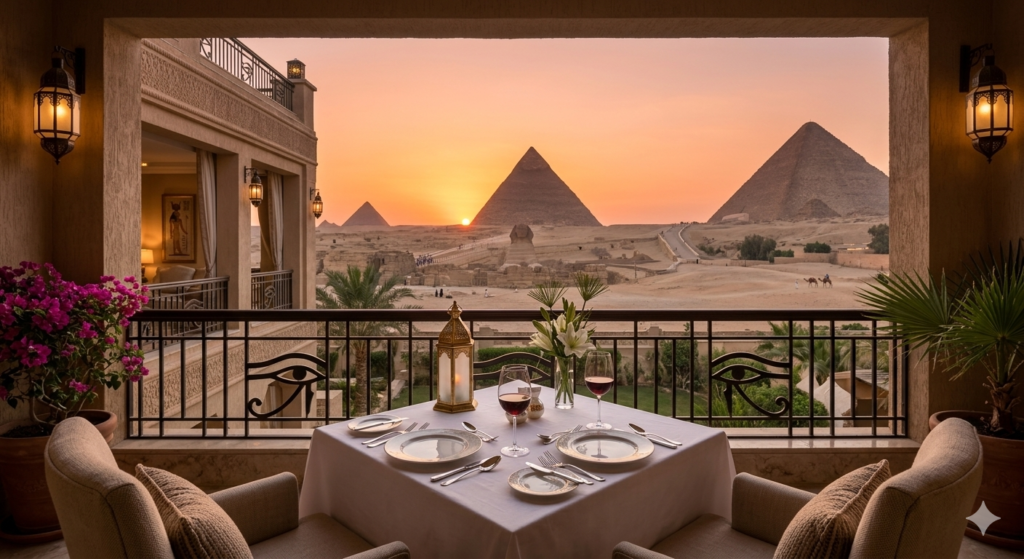
Wake up to a view of the Pyramids from your balcony. Originally built in 1869 as a royal hunting lodge for Khedive Ismail, the Marriott Mena House is a palatial oasis located just 700 meters from the Great Pyramid of Giza. Set within 40 acres of jasmine-scented gardens, this hotel has hosted legendary figures like Winston Churchill and Agatha Christie.
- The Experience: Sip your morning coffee on a private terrace as the morning mist clears from the Giza Plateau.
- Don’t Miss: Dinner at the Moghul Room, Cairo’s most celebrated Indian restaurant, or sunset cocktails at the 139 Terrace, where the pyramids feel close enough to touch.
2. The Old Cataract Aswan
Experience the colonial-era elegance where Agatha Christie wrote her famous novels. Perched on a pink granite cliff overlooking the Nile, the Sofitel Legend Old Cataract is a Victorian masterpiece. This is where the world of Death on the Nile comes to life. Blending French art de vivre with Egyptian grandeur, it offers an atmosphere of “old-world” mystery that is unmatched anywhere else in the world.
- The Experience: High Tea on the Terrace as traditional wooden feluccas glide past Elephantine Island at sunset.
- Don’t Miss: A visit to the Agatha Christie Suite, the very room where the author penned her masterpieces, or a royal dinner under the 75-foot-high dome of the 1902 Restaurant.
3. Four Seasons Hotel Cairo at Nile Plaza
The ultimate in modern luxury overlooking the river Nile. Located in the heart of Cairo’s prestigious Garden City district, the Four Seasons Nile Plaza is a beacon of contemporary sophistication. While the other hotels offer a look into the past, this property provides a 5-star lens into the vibrant, high-energy future of modern Egypt.
- The Experience: Floor-to-ceiling windows and private balconies provide panoramic views of the Nile, the Cairo Tower, and the city’s shimmering night skyline.
- Don’t Miss: The world-class 8 Restaurant for authentic Cantonese cuisine, or the expansive spa, which is widely considered the most tranquil sanctuary in the middle of the bustling capital.
Savor the Flavor: Restaurants
Egyptian cuisine is a soulful blend of Mediterranean, Middle Eastern, and North African influences. It is a world of slow-cooked legumes, aromatic spices, and grilled meats that have sustained generations. To truly understand Egypt, you must eat like an Egyptian. For a curated “foodie” tour that hits the best hidden gems and high-end dining, Tripzoori can arrange private culinary guides to lead you through the labyrinth of Cairo’s best kitchens.
a) Abou Tarek( Cairo)
The world-famous spot for Koshary, Egypt’s national dish. You cannot say you’ve been to Cairo until you’ve sat inside the neon-lit, multi-story landmark that is Abou Tarek. This restaurant specializes in exactly one thing: Koshary. This legendary comfort food is a hearty bowl of pasta, rice, black lentils, and chickpeas, topped with a tangy tomato sauce, garlic vinegar, and a mountain of crispy fried onions.
- The Experience: It’s fast, loud, and incredibly authentic. Watching the servers “clink” the metal spoons against the bowls in a rhythmic symphony is part of the show.
- Pro Tip: Don’t forget to add a splash of the signature spicy “shatta” (chili sauce), but proceed with caution—it packs a serious punch!

b) Zooba
A trendy, colorful chain that serves modern twists on traditional street food. What started as a small, bright blue storefront in the Zamalek district has turned into a global sensation. Zooba takes the humble staples of the Egyptian diet—like ta’ameya (falafel) and hawawshi (spiced meat-stuffed bread)—and elevates them with high-quality ingredients and creative flair.
- The Experience: The restaurants are vibrant, featuring upcycled décor and a “cool Cairo” vibe. It’s the perfect place for travelers who want to sample authentic street flavors in a clean, trendy, and highly “Instagrammable” setting.
- Must Try: Their pickled lemons and various flavors of spicy tahini are game-changers.
c) Felfela
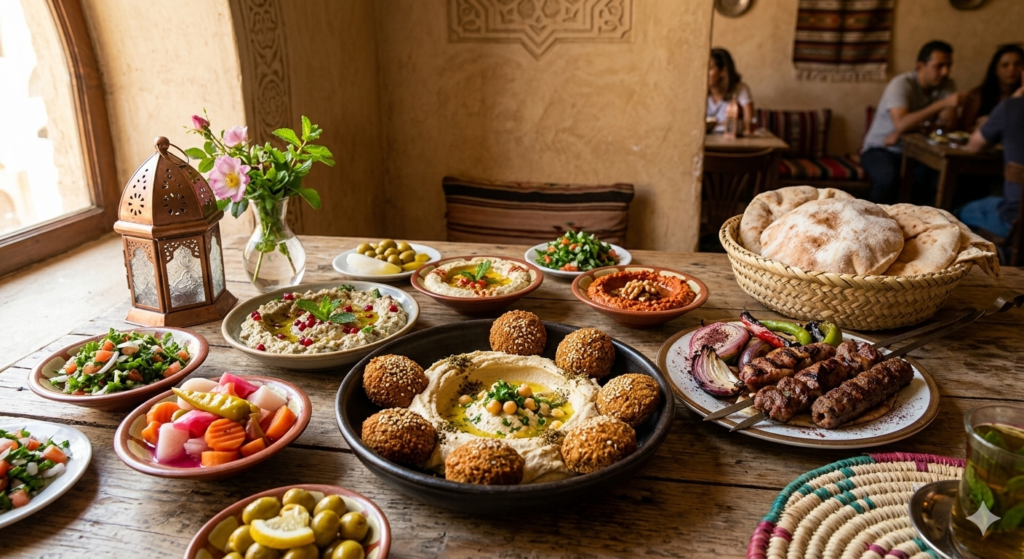
A classic choice for authentic falafel (ta’ameya) and grilled meats in a rustic setting. Since 1959, Felfela has been the gateway for international visitors to discover the delights of Egyptian home cooking. Located near Tahrir Square, the interior feels like a hidden garden or a rustic grotto, filled with wood carvings and greenery.
- The Experience: Felfela offers a slightly slower pace than the street-food stalls, making it ideal for a long lunch. Their ta’ameya—made with fava beans rather than chickpeas—is often cited as the best in the city.
- Must Try: Order a spread of “Mezze”—small plates including baba ghanoush, muhammara, and perfectly charred lamb kebabs served with fresh, pillowy baladi bread.
Unmissable Sites: Essential Landmarks
i) The Grand Egyptian Museum (GEM)
The world’s largest archaeological museum. Located on the Giza Plateau, the GEM is a modern marvel housing over 5,000 artifacts from Tutankhamun’s tomb. For the first time in history, the boy king’s entire collection is displayed in one place, offering a staggering look into the wealth of the 18th Dynasty.
ii) Valley of the Kings
The secretive royal burial ground in Luxor. Hidden in the limestone hills, this necropolis contains the tombs of New Kingdom pharaohs. Descending into these chambers reveals vibrant, original hieroglyphics and astronomical ceilings that have survived for over 3,000 years.
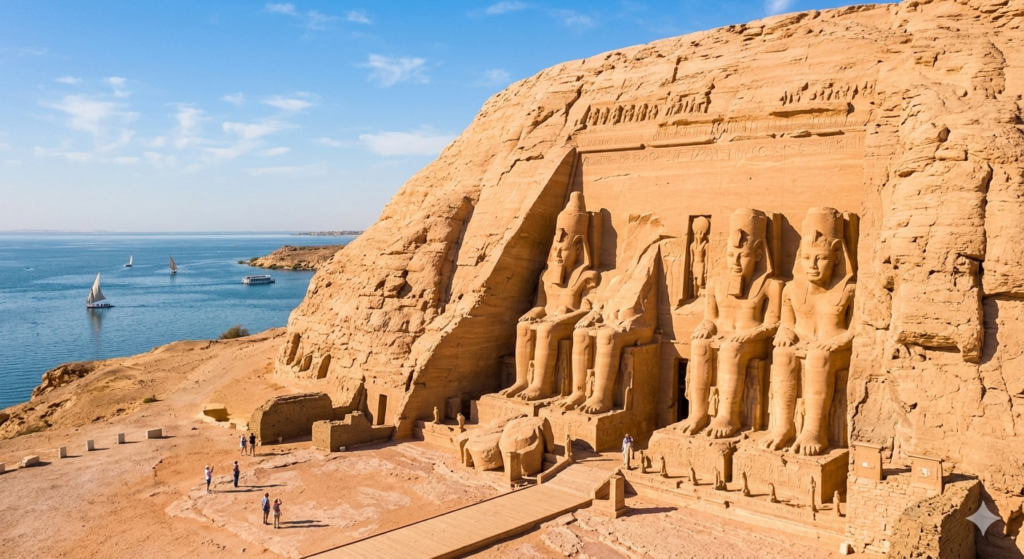
iii) Abu Simbel
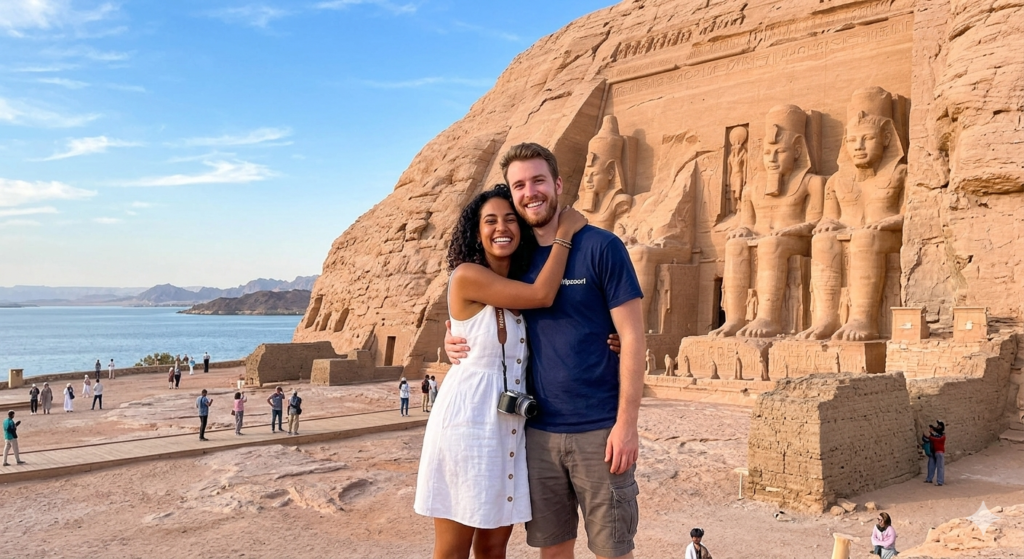
Colossal temples carved into solid rock. Built by Ramesses II near the Sudanese border, these temples feature four 20-meter-tall statues of the Pharaoh. This site is a masterpiece of ancient engineering, famously saved from Lake Nasser’s rising waters by a massive international relocation project in the 1960s.
The Eternal Call of the Nile
Egypt is more than just a chapter in a history book; it is a living, breathing testament to human ambition and resilience. From the towering silent sentinels of Giza to the aromatic, bustling markets of modern Cairo, this is a land that doesn’t just show you history—it invites you to walk through it. Whether you are chasing the ghosts of pharaohs, diving into the sapphire depths of the Red Sea, or sharing a mint tea with a local in a centuries-old café, Egypt promises a journey that will transform you.
Ready to walk where legends were born? To ensure your adventure is as seamless as a royal procession, we recommend booking your entire journey through Tripzoori. As the preferred travel agent for Egyptian escapes, Tripzoori takes the stress out of planning by handling everything from specialized Nile cruise bookings and private Egyptologist guides to luxury hotel stays and internal flights.
Don’t just dream of the desert—experience it with the experts. Visit Tripzoori today to start crafting your bespoke Egyptian itinerary. The “Gift of the Nile” is waiting to share its secrets with you, and with Tripzoori, your passage to paradise is just a click away.